Showing posts with label Load Rules. Show all posts

Monday, February 16, 2015

Stupid Programming Tricks No. 20 -- Load Rules, header rows, and confusion

Load Rule hate

Yes, I do go on and on and on about Load Rules, but those little bastards have wasted quite a few hours of my professional life.  I have to believe that Load Rules were written by Old Scratch hisself.  They are evil, evil, evil things masquerading as useful.  Except they aren’t.  Don’t agree?  Join me on this tale of woe.

Loading data

Load Rules are a simple (yet evil and yes there is some personal bias in this but it is my blog after all) interface for loading files and tables into Essbase as either data or metadata.  Every schoolboy knows this, or at least every Essbase developer.

Header records

And everyone knows what a header record is – it’s that first row (or potentially rows) that define metadata not in the body of the data file be it column names or dimensions not defined in the columns.  Header records are dealt with in the Load Rule Data Source Properties dialog box.  

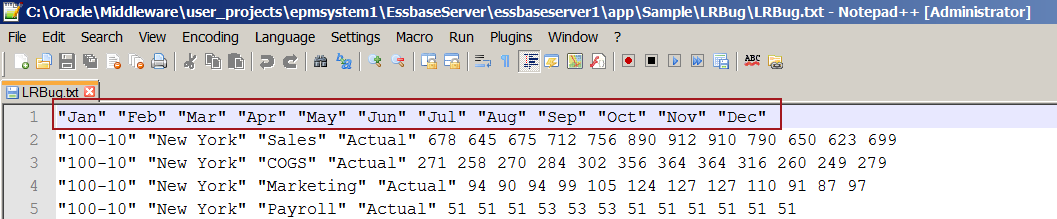
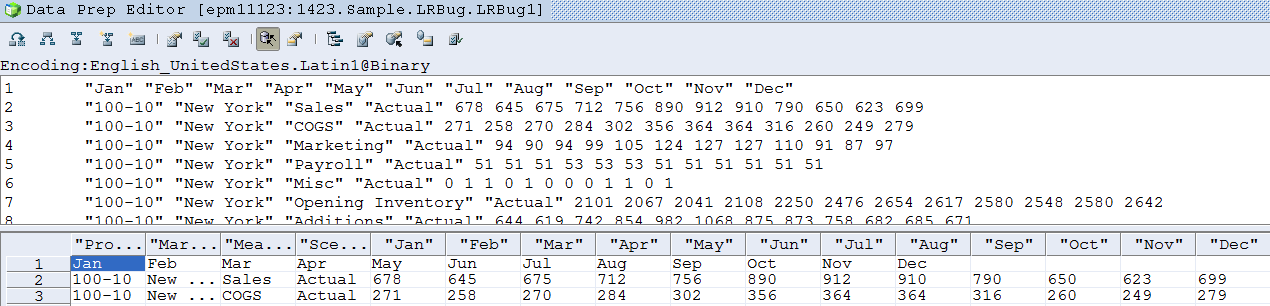
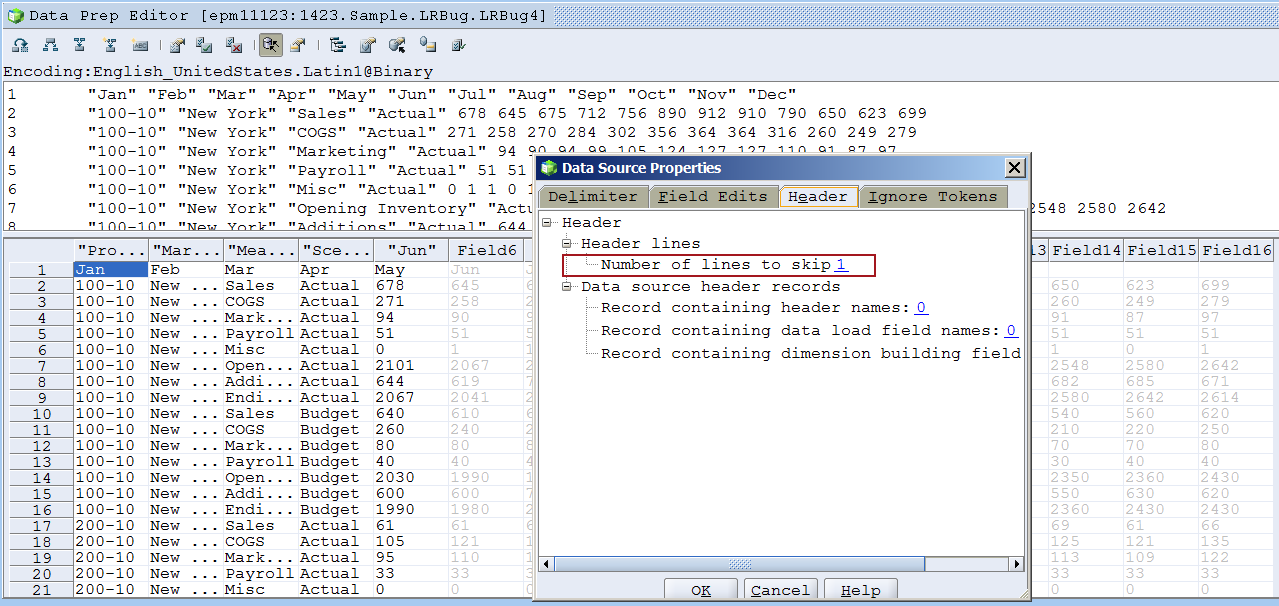
Here’s an example from the export of Sample.Basic.  Pay attention because There Will Be a Quiz Later.  That bit in the red box is the somewhat-useless header.
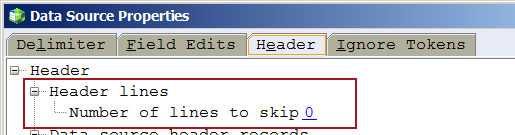
Data Source Properties

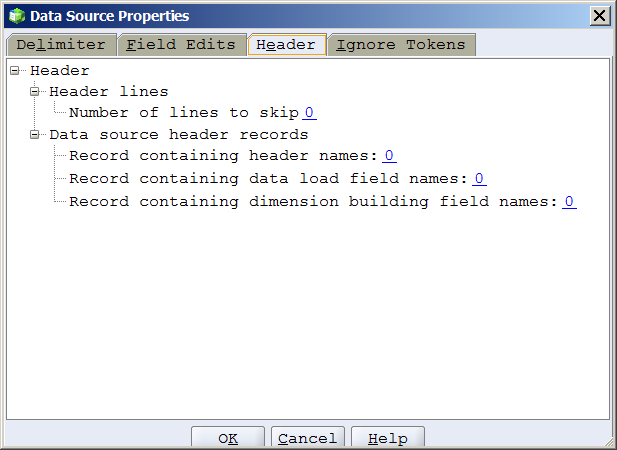
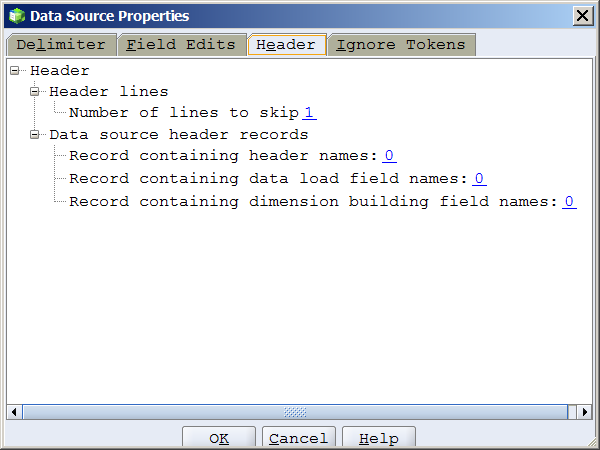
Below are the default settings – skip zero rows, no header records, no data load field names, and no dimension building field names.

In the case of the above export file, the Number of lines to skip parameter is set to 1 because the header record as defined is useless for columnar import.
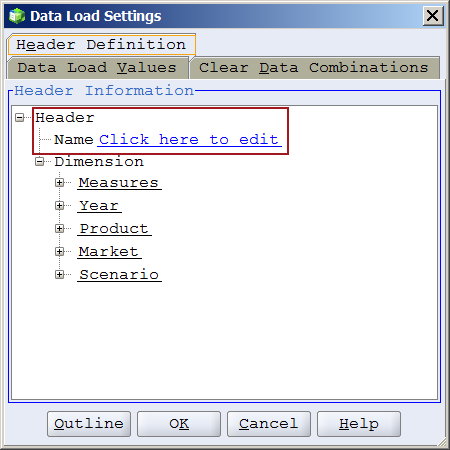
Data Load Settings

A common way to add a missing dimension to a data Load Rule is to use Data Load Settings and in the Header Name field type in the desired dimension.  This post’s use case doesn’t use this approach and is  noted only for \completeness.
The review on header records in Essbase is now complete.

Enter the bug

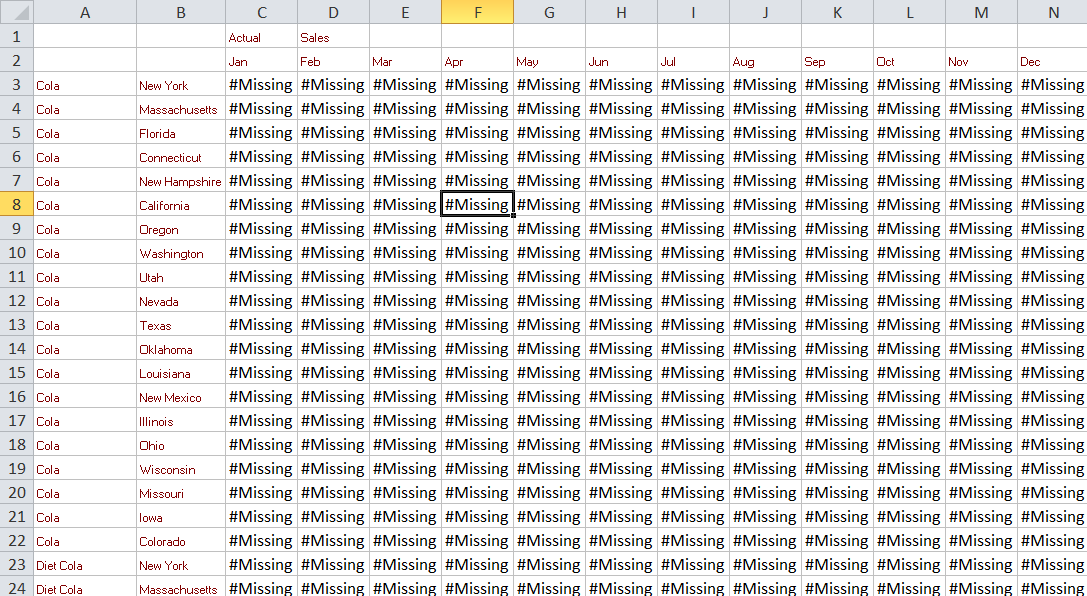
Here is Sample.Basic clear of data in Smart View:
Here’s a simple Load Rule without an exclusion of the first record.  Remember that first record that is an artifact of a columnar export from Sample.Basic that starts off with a tab, then Jan, then Feb, then Mar, etc.?  That’s Essbase’s Period header record although since it doesn’t line up with any column it’s pretty worthless when it comes to loading.

Let’s skip the header:
Here’s the Load Rule.  Note that, unsurprisingly, all 12 months are being loaded.  This Is A Clue.
What happens?  Two things:
  1. The data loads.
  2. A data load error file is generated.

Loaded data in Smart View.
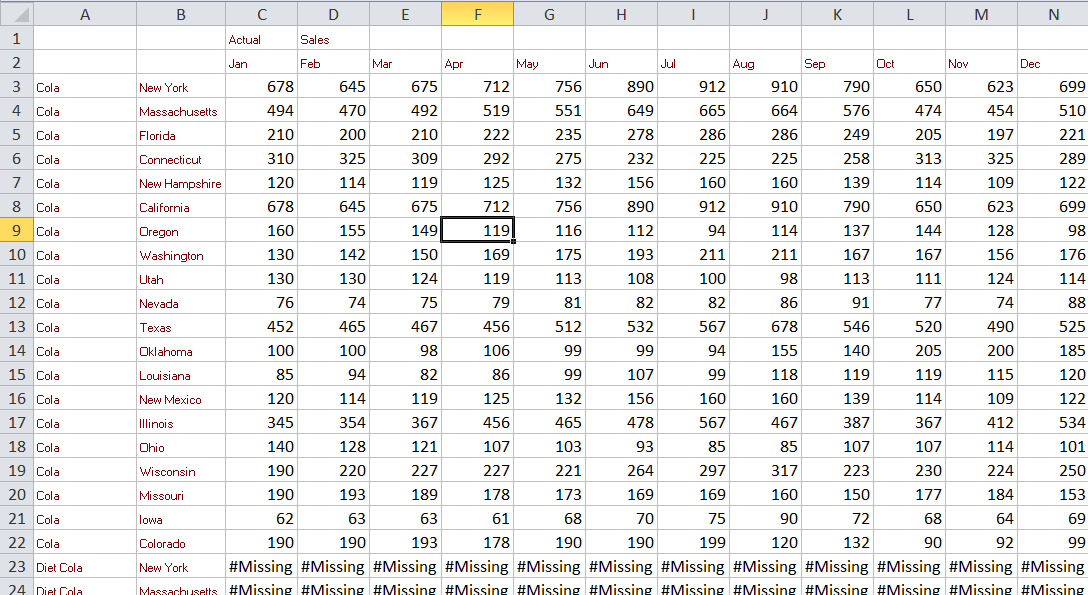
All is good.

Let’s not skip the header:
And what happens?
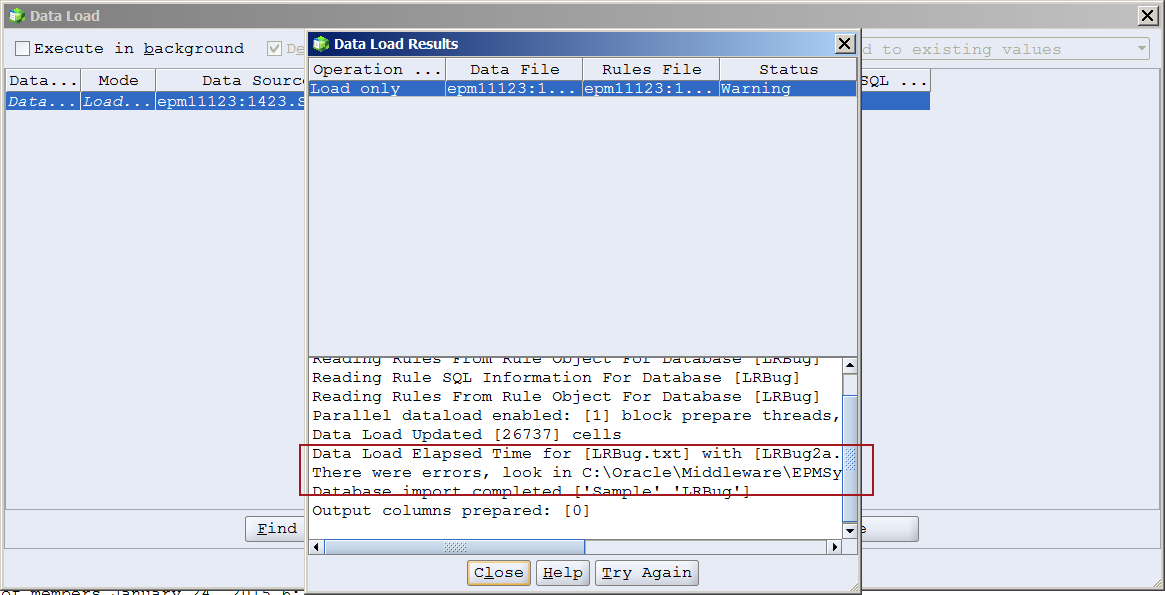
The error we expected.  
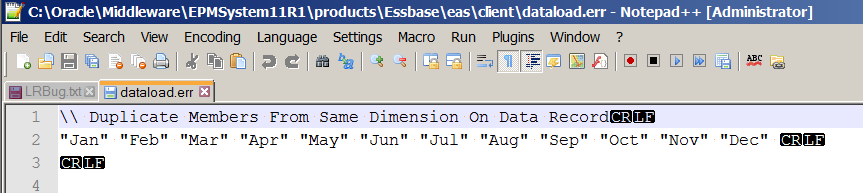
All is well and good and expected.

Bull in the china shop

But what happens when all data columns but the first are ignored and the Period is set to Jun.
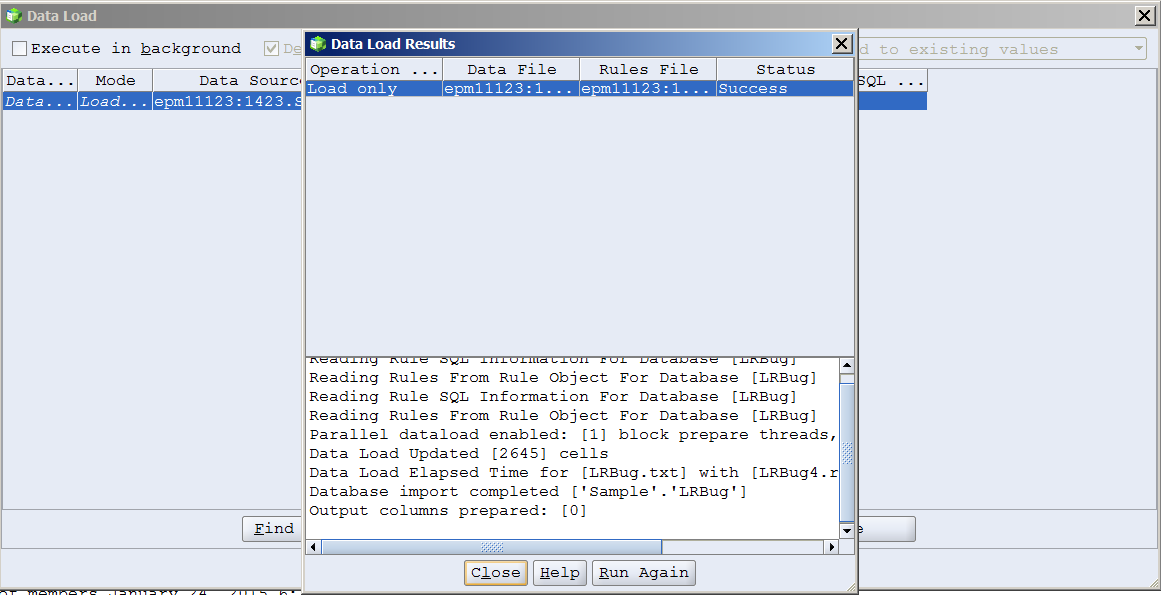
Less data is loaded, but no error.  
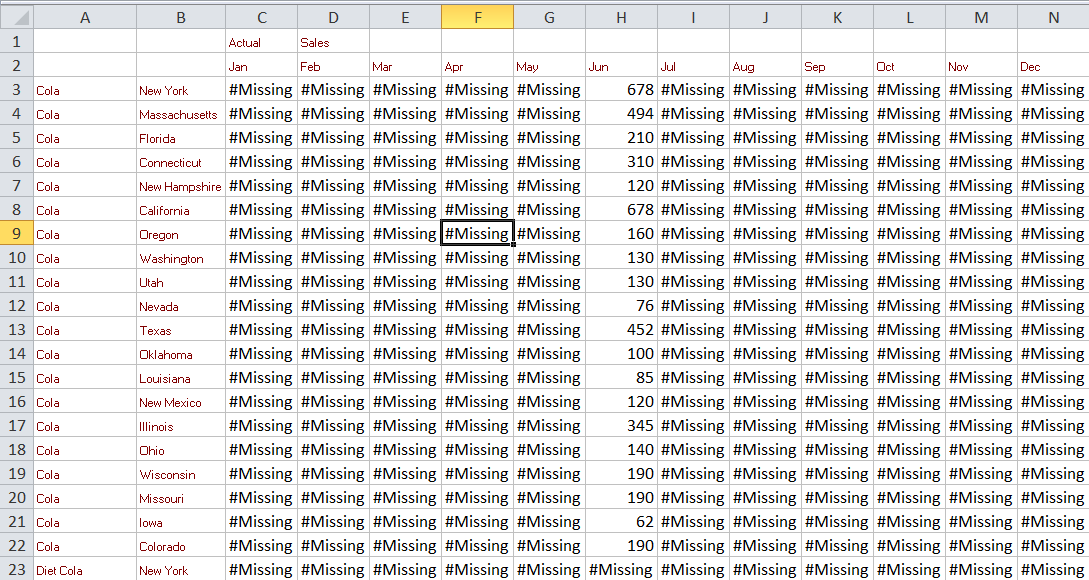
Just as expected, only Jun data is loaded although in reality it’s from the January column of data.  Regardless, this is expected behavior.
O Horror, O Misery, O Despair

But what happens if the header row is not excluded?  It worked in the 12 month example and just threw an error file so obviously the same would happen with one month.  Except it doesn’t.
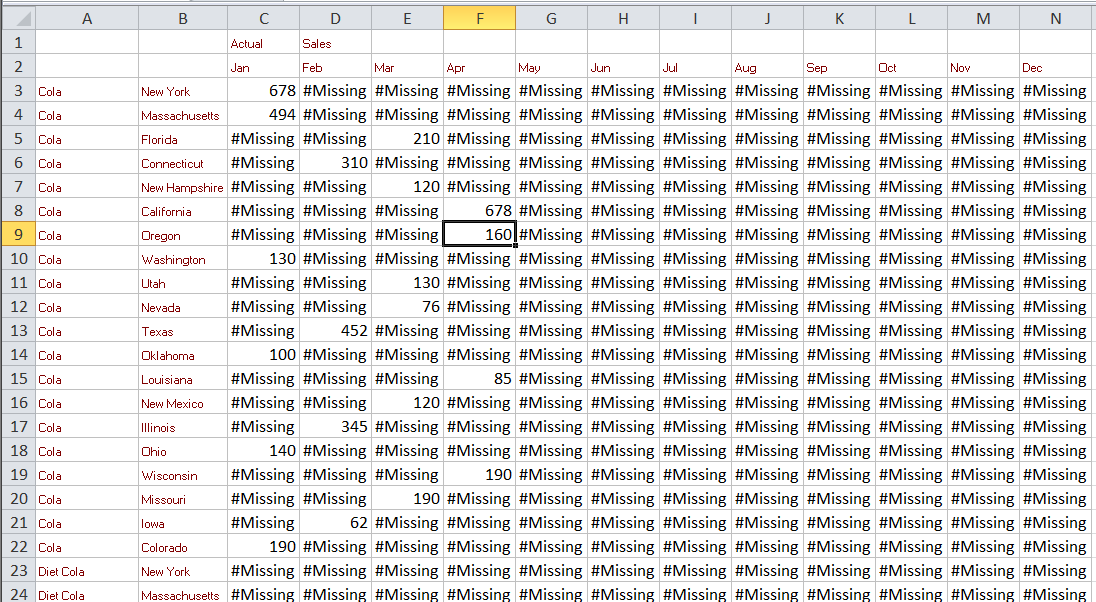
Whaaaaaaaaaaaaaaaaaaat?  

I can almost observe a pattern in the data, or at least I would if cell C3 was Jan, cell D4 was Feb, cell E5 was Mar but as you can see from the above it doesn’t work that way.  Mr. Toad had it right, O Horror, O Misery, O Despair.  As he said, right before everything went pear shaped, “O, how clever I am! How clever, how clever, how very clev----”  

Nope, I’m not clever and just like Toad when he was At Her Majesty’s Pleasure, I am, “…a helpless prisoner in the remotest dungeon of the best-guarded keep of the stoutest castle in all the length and breadth of Essbase Load Rules.”  The last bit may not quite have been how Kenneth Grahame wrote it, but you get the idea.

“I’m such a clever Toad”

If all of the above doesn’t convince you in the strongest possible way that SQL should be the only data source for Essbase, I don’t know what would.

Be like wise old Badger, or Rat, or Mole, or even the sadder but wiser Toad, but definitely not like yr. obt. svt. as I wasted several otherwise well-spent hours as I tried to figure out what was giving me such weird results when I only wanted one month for testing purposes.  

So frustrating.

Be seeing you.

Monday, December 31, 2012

Death of a thousand cuts

It is no secret

I have no love for Essbase Load Rules.  Mostly because I have comprehensively, completely, and utterly tied myself into knots using them.  And I should be clear about this – they are dangerous in my mind because it is easy to crude ETL in them that you (or at least I) will promptly forget about.  When it comes time to change things, or data changes, it is a complete Pain In The You-Know-What to figure out what was done in the rule.  Yes, they were Hot Stuff when invented, but that was almost 20 years ago (yes, really) and it is time for their closed nature to go, go, go.  Well, at least that’s my opinion.  I don’t really hate the things, but I do think that ETL via Load Rules is just asking for trouble and I wonder why there is no other lightweight way of sending data in an automated fashion.  Read on, gentle reader (all three or four of you), and yr. obdnt. srvnt. will reveal all.

Four exceptions to Load Rules

Actually, there are at least four different ways of sending data to Essbase without using Load Rules.

Load in free form

Have you ever locked and sent (BSO and the classic add-in)/sent (ASO and the classic add-in) or submitted (BSO or ASO and Smart View)?  Then you have used Essbase’s free form data format and yes, you can load it directly into Essbase sans Load Rule.  Want an example?  Take a look at CALCDAT.txt in Sample.Basic.  It is a free form data file with level zero and consolidated data values.  Why Arbor (yes, it is that old) did that, I cannot say, but they did.  

Load via ODI

ODI has an option to load data directly into Essbase without a Load Rule.  However, there seem to be lots of issues with that approach (go on, search for it and you will note that most ODI practitioners use a Load Rule because it is cleaner) and of course you have to buy into ODI in the first place.  I am a huge fan of the tool but its learning curve has a very cliff-like look to it.

Load via Studio

Essbase Studio is a great way to explore data, model it, and ultimately express it in Essbase.  And yes, there is nary a Load Rule to be seen in the tool.  But, at the end of the day, Load Rules are used to get metadata and data into Essbase.  I am inclined to cut Studio a break as Studio developers don’t so much as dirty their fingernails with Load Rules.  Nevertheless, programmatically derived Load Rules (that use ultra-secret API calls) are still part of the equation as they are generated by Studio so it is still tarred with that brush.

Load via MaxL

Did you know that MaxL allowed you to load data points to Essbase?  No?  Did you know import data did this?  It’s really pretty easy.

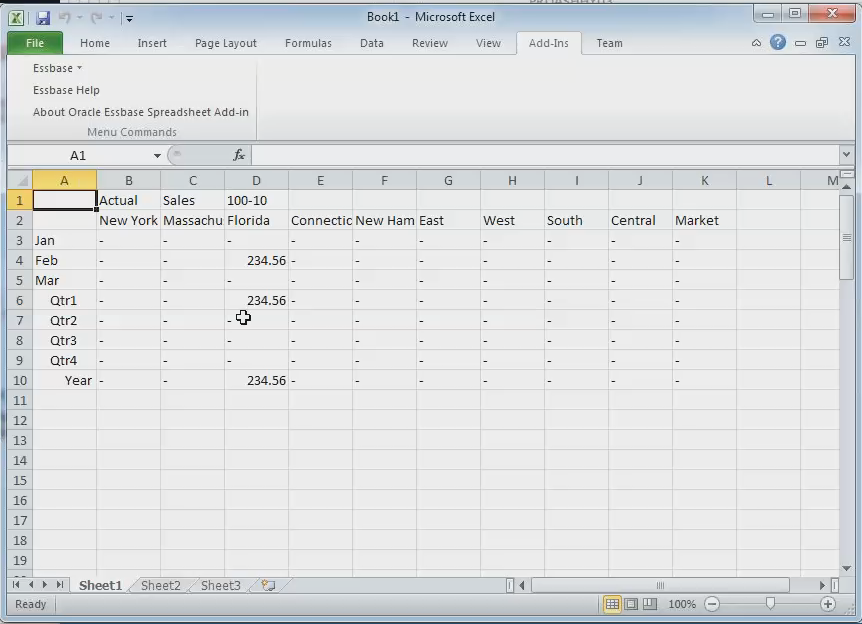
Before


MaxL


After


Pretty cool, eh?  You will note that this is essentially a free form data load which is the same as a submit (see, I am divorcing myself, reluctantly, from the classic add-in in every way and manner) from the Microsoft Office tool of your choice.  But this approach isn’t really suitable for more than a small amount of information.  

Four exceptions, but none necessarily right

Free form simply is not a practical solution, ODI is a great tool, but you have to be 100% committed to it and it has its caveats, Studio, while cool, is also not a simple solution and it resolves to the dreaded Load Rules in the end, and loading small bits of data via MaxL is interesting, but ultimately not practical.

What is needed is a lightweight way to load data, from SQL, without any of the above approaches and of course without Load Rules.  How oh how oh how can this be done?

HyperPipe to the rescue

Well, I didn’t write it

I was whining/complaining/ranting (I can do all of this at the same time and it is difficult to distinguish one from the other) to Jason Jones about Load Rules (yeah, this is one of the biggest bees that buzz around my bonnet) and he said (NB – Artistic License ahead), “Really?  You’d like to load data to Essbase without using Load Rules?  Give me a couple of days.”  And so it was.  It is great knowing people who are smarter than you.  

So what is it?

It’s a command line way to load from files or SQL to Essbase.  Note the words that are missing from that sentence – Load Rules.  <insert evil laugh>  This example will show loading to MVFEDINTWWW, aka Sample.Basic step by step.
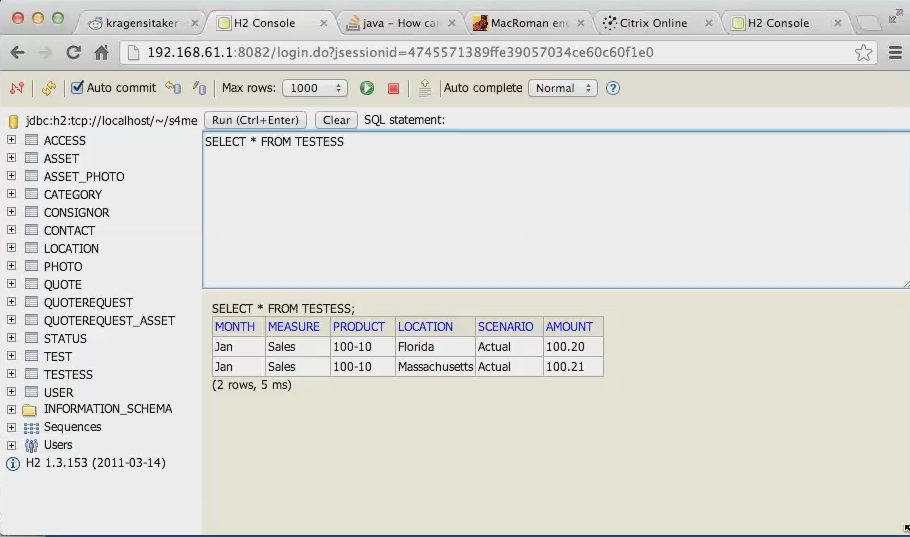
Data in SQLOh, did I mention that the Merant ODBC drivers are no more?  What you see below is the open source H2 Java database.  Did I mention the client is running on a Mac?  It made me laugh out loud.
I should note that the above is not implying a Mac version of Essbase, but instead shows that with a web application orientation, one can access data and processes across platforms and machines.

Data target

Here’s the data target.  Jason has not yet made the switch to Smart View.  I understand his pain.

Where does it run?

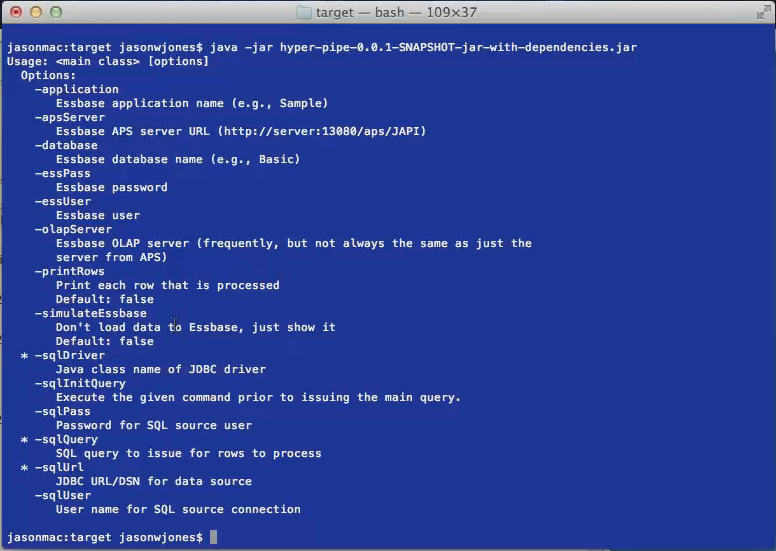
Jason is a Java guy, so the code to run this is in the hyper-pipe (HyperPipe?  hyper-pipe?  Tomatoe, tomatoh) jar file through the bash Unix shell.
Are you catching all of the properties?  Just about everything one could possibly think of wrt a data load to Essbase.  You can read the screen as well as I but I draw your attention to two parameters.

sqlDriver

JDBC to the rescue, ODBC goes bye-bye.  Neat, huh?

sqlInitQuery

Want to manipulate columns and data?  Do it in SQL, as Zeus declared on Mount Olympus.  At least I’m pretty sure he said that in Clash of the Titans.  Just watch the good (original) one -- I think me mentions it right after, “Release the Kraken”.  

You may fire when you are ready, Gridley

And that’s it.  A load to Essbase, from SQL, with Load Rules being conspicuously absent.  <insert big grin>

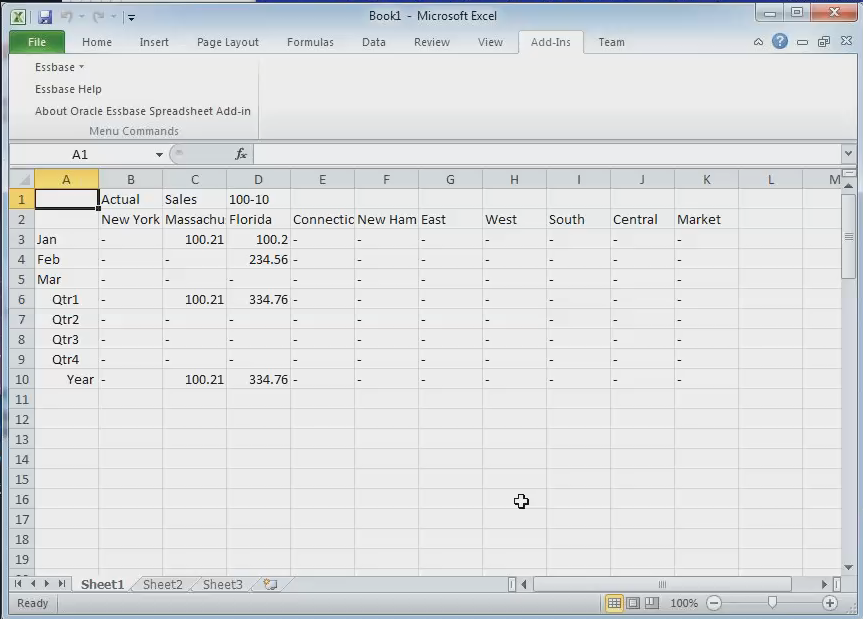
Data in Essbase

How does it work?

Jason described it as akin to the MaxL data load process.  And that is all I know of it as I am no Java programmer.  However, the good news is that Jason is going to release this as an open source project so you can download it and tear it apart.  Have fun.

So is that the end of Load Rules?

Alas and alack, no.  They will be around, quite possibly forever (if you define forever for as long as there is an Essbase, then yes, definitely forever) as there are simply too many people with too much code in them.

On the other hand, Oracle took the bold step of giving the chop to Hyperion Business Rules to be replaced in 11.1.2.2 onwards with Calculation Manager and the same is true for the Classic Excel add-in for Essbase, so there is hope.  

As of this writing, Jason has not released HyperPipe but as I noted, he is an open-source kind of guy.  Contact him via his blog and look there for a much more in depth review of the tool.

And let me also give a hearty thanks to Jason for figuring out how to do this.  Now if only a certain absolutely humongous software company takes this concept and runs with it.  <insert the biggest grin thus far>  As the immortal Robbie Burns wrote, “Ah, but a man's reach should exceed his grasp, Or what's a heaven for?

Be seeing you.

Popular Posts